







































9 Ways to Fix Profit Leaks in Your Restaurant
 Armie M
Ever feel like your restaurant is thriving, but you’re still not hitting the goals you expected by now? You’re not alone.
The thing is, when you’re running a restaurant, it’s not just the big stuff—like expansion or rebranding—that drains your profits. Most times? It’s the quiet leaks you don’t even notice until it’s too late.
1. Prep Wastage: Chopping Up Your Profits.
When you’re working without solid forecasting, your team ends up either overprepping ingredients or prepping them way too early—and both lead to waste. Excess food gets tossed into the trash, and for your restaurant? That’s cash straight down the drain.
Recommendation:
- Review yesterday’s sales before prepping starts.
- Only chop, thaw, or portion what you’ll actually use today.
- Stick to a prep sheet—and tweak it daily based on what’s selling.
2. Errors in the Orders
n fast-paced environments like QSR and fast casual restaurants, roughly 16% of orders are taken wrong. While there’s no such thing as a perfect service, sending out dishes that were either never ordered or inaccurately prepared forces you to remake the order—and throw the incorrect one away. That’s profit slipping out the back door.
Recommendation:
- Keep a “mistake log” at the line. Document every error and its root cause.
- Review weekly to identify patterns (example: recurring modifier mix-ups during peak hours).
- Train staff where gaps pop up.
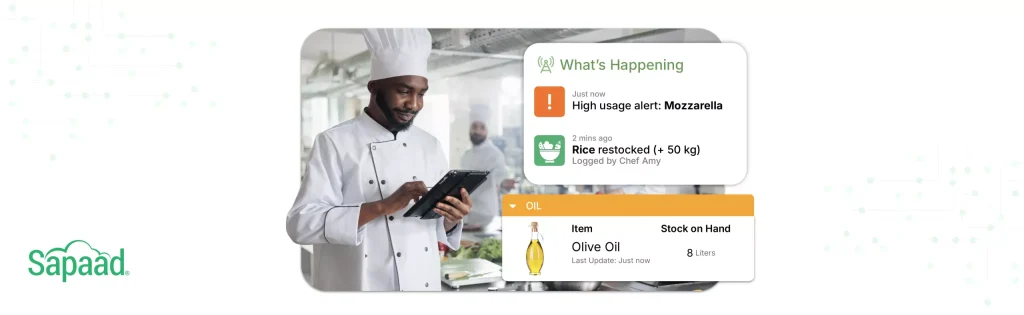
- Use tools like Sapaad Vantage to automate tracking and stay proactive
3. Uneaten Food or Plate Waste
As much as we want guests to finish every bite, some dishes still come back uneaten. This happens for countless reasons: personal taste, overordering, or even menu mismatches. For restaurants, though, uneaten food means you’re prepping ingredients that go unwanted—a direct hit to your bottom line.
To curb this profit leak, focus on the factors you can control:
Recommendation:
- Track what’s being left behind after each shift.
- If certain items repeatedly come back, adjust portion sizes or refine the recipe to align with your guests’ preferences.
- Update prep plans weekly based on these insights.
4. Spillage Loss, the Drips and the Drops
Sometimes during service, dishes get dropped. Spills happen during prep. These small, everyday losses might seem minor, but they’re silent leaks nibbling at your profits over time.
Recommendation:
- Observe your team during peak hours. Identify where spills or drops occur most.
- Rearrange workspace layouts in problem areas.
- Upgrade tools (e.g., grippier trays, spill-proof containers).
- Retrain staff on safe carrying and plating techniques.
5. Spoiled or Expired Stock
Food spoils quickly when storage conditions are suboptimal or timing is off. Moldy bread, wilted herbs, curdled cream—every ounce of waste chips away at your profits. Staying ahead of your pantry before ingredients expire or spoil is how you safeguard your bottom line.
Recommendation:
- Every Friday, conduct a “walk-in audit” to check expiration dates and rotate stock—oldest items in front.
- Label everything clearly and discard anything questionable.
- Update your inventory list on the spot—or let Sapaad Vantage track adjustments automatically and flag aging stock.
6. Errors in Delivery
It’s not just during storage that food can go bad. In-transit, with so many factors hinging on the quality of aggregators, including climate, so many things can impact how food is stored and how it can easily spoil before reaching your pantry. Not only that, late deliveries can force you to pay for ingredients out of budget, and wrong items can get delivered, resulting in the same issue.
Recommendation:
- Before any delivery leaves, do a final check: Is the order correct? Is it packed well and kept hot?
- Log any returns and review them monthly to fix root causes.
- Sapaad’s delivery aggregator integrations help reduce manual errors and keep things synced.
7. Overproduction
When you bake 30 muffins on a slow day and end the shift with 20 still in the display—you’re wasting more than just ingredients. You’re wasting labor. But with the power of data at your fingertips, you get a clearer view of slow days, letting you scale back production and even give your staff some much-needed time off.
Recommendation:
- Track how much of each menu item is left over at the end of every shift.
- Adjust tomorrow’s prep or cooking amounts based on real demand, not gut feeling.
8. Hidden Nibbles of Untracked Staff Meals
Sometimes on slow days, staff grab a snack or two outside of family meals. It could be munching on fries or whipping up an easy meal, neither of which gets logged. These freebies add up fast when they fly under the radar.
Recommendation:
- Set a clear staff meal policy (what’s allowed, when, and how much).
- Log every staff meal or snack like a customer order.
- Review weekly to spot patterns or overuse.
9. Lapse in SOPs
New hires aren’t fully trained. Long-timers pick up bad habits. The result? Errors pile up, consistency tanks, and systems crack under pressure.
Recommendation:
- Review one skill or SOP weekly. Keep it short, actionable, and part of the routine.
- Use GoAudits to streamline training audits and track progress.
- Cross-train staff to handle rushes without cutting corners.
By tackling these nine common profit leaks, your restaurant can reclaim lost revenue and boost efficiency without drastic changes. Small adjustments in daily routines and leveraging the right tools make a big difference over time. Staying vigilant and proactive ensures your hard work turns into the profits you deserve.
Armie M
Author

Related Blog Posts





Get the latest news and updates
Submit your email address to join our email list.