
































How to Improve Restaurant Service and Customer Experience
 Mirash T
Maintaining a successful restaurant in today’s highly-competitive landscape is no small feat. No matter the size of your operation, good service in a restaurant means there are key customer expectations you must consistently meet in order to establish a world-class customer experience that both newcomers and your regulars will remember.
In this article, we’ll provide practical, but powerful tips on how to improve restaurant service and restaurant customer experience. For new restaurant owners, this can serve as your north star; ensuring you don’t miss simple but impactful details of day-to-day operations. For established restaurateurs, this can serve as a checklist to ensure you continue delivering exceptional service while maintaining the loyalty of your customers.
Train for Speed and Efficiency
Some customers may tolerate slow and inefficient service for the sake of enjoying their favorites, but if you want to stay ahead of the competition, you shouldn’t make compromises. Quick and efficient service is a habit your staff must establish from day one. This is where a solid training plan does wonders for the future success of both your staff, and of course, your restaurant.
So if you’re a new restaurant owner, how do you make sure you’re creating an effective training plan? Similarly, if you’re an established restaurant owner, how do you make sure your training plan remains relevant and updated for incoming staff? It starts with complete awareness, and honesty, about your restaurant’s performance.
Having access to a real-time business intelligence and analytics (BI) dashboard is extremely helpful for identifying where your operation is excelling, and where you’re struggling. By having this information, you can identify actionable insights and make the necessary changes to ensure you’re consistently improving your service quality, speed, and efficiency.
Notice your average wait time increased by 10 percent in the last 30 days? Review your current process and think on what changed to diagnose the root cause. Once you identify the issue, update your training plan to make sure that incoming staff avoid the habits and patterns that lead to the identified inefficiency. You can also hold refresher training sessions so that current staff can adapt new, more efficient practices.
Additionally, when creating or updating your training plan, ensure that you make objectives specific and clear. For example, if you’re going to roleplay the preparation and service of a new dish, set a countdown timer for your ideal service completion (from order confirmation, to table service). This way, you can measure the efficiency of your current processes and make adjustments as needed.

Create a Seamless Ordering Experience
The key to creating a seamless ordering experience is to minimize the amount of work that both the customer and your staff have to do to fulfill each order. This means reviewing both internal staff processes, and standard customer interactions to identify possible bottlenecks and areas where efficiency can be improved.
Streamlining tasks like order entry, payment processing, and communication between the kitchen and front-of-house staff ensures that orders are fulfilled quickly and accurately. By integrating intuitive, user-friendly technology, such as digital menus or mobile ordering apps, you can further simplify the process and enhance the overall dining experience for your customers.
In addition to simplifying individual orders, you can enhance group dining by offering convenient ordering options. For instance, set up a single table QR code that allows each person to place orders from their phone, all under one tab. Then, provide the option to either split the bill evenly or let each person pay for their own order.
Introduce Personalization and Flexibility in Service
Dine-in customers appreciate it when you remember their preferences, accommodate requests, and customize their orders as requested. Granted, not all requests to personalize and be flexible can be fulfilled, but having the tools and willingness to go the extra mile for each customer can go a long way in building brand loyalty and advocacy.
For example, introducing a table QR that allows diners to view the menu and customize their orders at their own pace is great, but also including a “tap for waiter” feature so they notify wait staff through a waiter app for assistance is even better. Additionally, providing the option to split or merge tables and orders allows your restaurant to serve groups of all sizes, further enhancing your overall dining experience.

Reduce Service Errors and Wait Times
Service errors can be costly in many ways. Not only does it lead to food wastage in the short term, you also risk losing that customer’s business in the long term if you don’t remedy the situation quickly, and thoroughly. In order to protect your restaurant’s customer experience and reputation, you should take active steps to reduce the frequency of service errors.
For example, the paper order slips used in traditional restaurants can be susceptible to damage, illegibility, and misplacement; this can lead to service errors, delays, or both. Modern restaurants utilize integrated Kitchen Display Systems (KDS) that work in sync with their cloud-based POS. This way, confirmed orders are immediately forwarded to one or several KDS so that kitchen staff can prepare the correct orders in a timely manner.
This two-pronged approach helps reduce your restaurant’s overall food waste, while protecting your service quality and customer experience through service error reduction and faster service.
Provide Cashless Payment Options for Faster Checkouts
Long wait times for service are a common complaint among dine-in customers, and most restaurants work hard to address this to maintain a positive customer experience. However, a less obvious issue that’s often overlooked is long checkout times. So what can you do to address this issue, aside from simply hiring more wait staff, which isn’t always the practical solution?
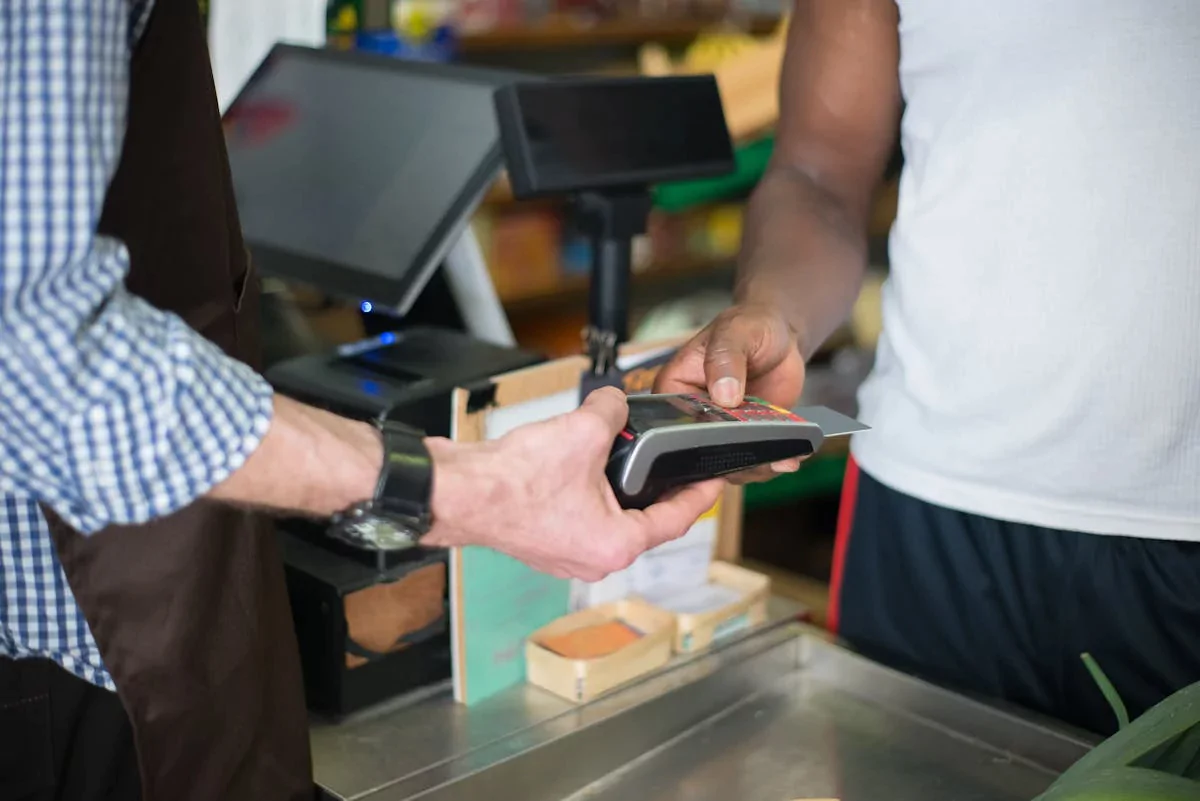
Introducing cashless payment options speeds up the checkout process for customers and offers several benefits for your staff. First, allowing customers to pay at their own pace using tools like table QR codes eliminates complaints about slow manual checkouts. Second, since customers handle their own payments, staff are freed up to focus on more important customer service tasks that require their attention.
Lastly, the successful implementation of cashless payment options means you can limit cash handling in your restaurants, lowering the risk of theft and mismanagement of funds.

Use Operational Data to Make Informed Decisions
During a typical day of restaurant operations, vast amounts of data are either collected and transformed into actionable insights or lost and ignored, depending on your business setup. The key to enhancing the dine-in customer experience lies in effectively interpreting your operational data and taking meaningful steps to integrate those insights into your processes.
To start, make sure you have a business intelligence (BI) tool that helps you automatically collect data from your daily operations. Ideally, your BI tool should be fully-integrated with your POS and other restaurant management solutions. This way, data collection happens seamlessly, with little to no manual effort needed from your end so you can focus on your day-to-day operations.
Once you’re set up, you’ll receive real-time business intelligence which allows you to immediately spot issues and make adjustments throughout the day to ensure your restaurant operations go smoothly. Additionally, through time and date filters, a good BI tool can also show trends. Sample trends include:
- Menu items that have steadily increased/decreased in sales in the past 3 months;
- An increase in average wait time from 12 PM to 2 PM (possibly signaling staff shortage during peak hours)
- Changes in staff performance with regards to sales per server, successful upsells, etc.
Having access to this information allows you to create long-term strategies that ultimately lead to an improved restaurant customer experience.
A powerful, real-time BI tool becomes even more indispensable for multi-unit restaurants, as it provides full visibility into the performance of each location, enabling you to identify top-performing branches, address underperforming ones, and standardize best practices across your entire operation for a consistently enhanced customer experience.

Empower Your Staff with the Right Tools
The importance of providing your staff with the right tools in order to excel at their roles cannot be overstated. While an effective recruiting program serves as a solid foundation, the quality of your daily dine-in service ultimately rests in your staff’s training and tools. Some examples are:
- An intuitive, cloud-based POS system that can function even while offline means your staff can perform top-tier service even if you experience issues with your internet connection.
- A user-friendly restaurant management software gives your staff full visibility into stock levels, ensuring you are never over, or understocked, leading to enhanced customer satisfaction.
- A table management tool that helps your staff manage running orders and monitor table statuses, ensuring orders are served timely, and diners are seated efficiently.
Improving your restaurant’s dine-in service, and with it, your customer experience, ultimately boils down to two things; training, and tools. By continuously investing in both aspects, you empower your staff to meet customer expectations consistently, reducing operational inefficiencies and fostering a more seamless dining experience. The combination of well-trained staff and cutting-edge tools is essential to securing your market share in today’s increasingly competitive market.
Sapaad’s F&B suite includes cutting-edge digital solutions that improve your restaurant’s dine-in service and customer experience.
Help staff manage tables and running orders with Sapaad Waiter. Empower customers to order at their own pace through our table QR via Sapaad Direct, and promote faster checkouts and easy tip management through our pay-at-table solution, Scan & Pay. Ensure order accuracy, and boost kitchen efficiency with Sapaad KDS. Finally, automatically collect operational data and gain real-time insights into your restaurant operations with Sapaad Vantage for better decision-making that drives profit.
Ready to take your dine-in service and customer experience to the next level? Book a free demo with Sapaad today!
Mirash T
AuthorRelated Blog Posts

Get the latest news and updates
Submit your email address to join our email list.