



































How AI Can Shape the Future of Food Halls
 Armie M
With the recent opening of the largest food hall in the Middle East – Market Island at Dubai Festival City – it’s easy to see just how popular food halls have become. Food halls offer a unique immersive experience that appeals to both customers and restaurateurs.
For diners, it’s all about the culinary variety, without the hefty price tag.
They get to enjoy different cuisines, and even sample dishes they may not have heard of, in a space that’s perfect for group dining. It’s an experience concept for adventurous and social diners.
Restaurateurs, on the other hand, get the opportunity to experiment with new concepts, and gain feedback from customers firsthand. Traditional restaurants often face challenges in introducing new menus, but in food halls, where the barrier to entry and ongoing costs are lower, they can easily bring their fresh ideas to life. It’s an excellent way to nurture emerging trends and local talent.
But, while food halls are at the forefront of culinary innovation, the question remains: do they have the technology to keep pace?
The Complexity of Food Hall Operations
As you might expect, a single space with a multi-vendor concept comes with its own set of operational challenges.
Stock procurement, for example, becomes a delicate balancing act, as each restaurant manages its own ingredients and suppliers to keep stock fresh and sufficient. This often requires coordination with multiple suppliers, each having their own schedules and limitations.
Food wastage is another challenge for vendors, as competition among participating restaurants makes it difficult to predict customer demand. This uncertainty can lead to overstocking or understocking.
Ideally, customers should be able to order from a single interface that gives access to all vendors in the food hall. Finding the best POS system for food stalls is essential for managing orders efficiently in a multi-vendor setup. However, synchronizing orders across multiple kitchens is a challenge that only a few POS systems on the market can handle.
Fortunately enough, restaurant tech has been – and constantly –evolving to meet these demands.

Current Tech in Food Halls
When working with a multi-brand concept, it’s important to have a clear process in navigating orders and processing payments.
This is where omnichannel ordering and unified commerce comes in—allowing customers to order and pay through in-person kiosks, mobile apps, or third-party platforms while keeping everything organized in one system.
Here are just some of the popular restaurant tech being used in food halls:
Internal Currency via RFID
A restaurant tech worth mentioning is Reloadable RFID “Yard Card” from The Market at Malcom Yards which serves as the food hall’s internal currency. Internal currencies, or pre-loaded credits, encourage customers to spend more by integrating loyalty programs, and reducing payment processing fees.
Self-service Kiosks
Kiosks are a great way to process orders quickly, especially in high foot traffic locations like a food hall. The upcoming Citizens Go food hall, set to open quite soon in 2025 within the Hartsfield-Jackson Atlanta International Airport, will be using self-service kiosks to make it fast and convenient for travelers.
Contactless Payment Options
Many vendors are quick to adopt QR code ordering for their food stalls. Diners are showing an increasing demand for the ability to simply scan a code, browse digital menus, and place orders directly from their smartphones — eliminating the need to stand in queues.
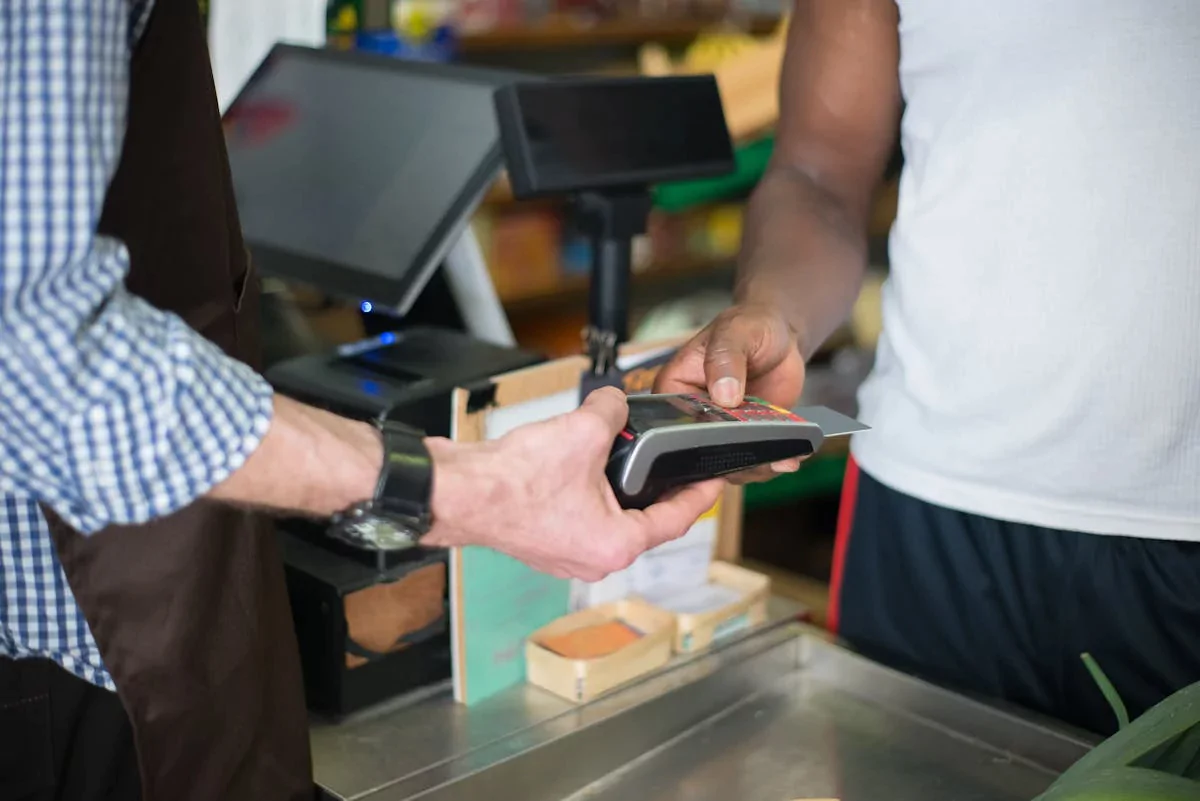
Whether it’s through QR code payment, tap to pay, or other contactless payments for food events, this shift towards digital transactions shows the direction the industry is heading—prioritizing speed, convenience, and a frictionless dining experience.

How AI Can Elevate the Food Hall Experience
As AI continues to advance, it’s transforming food hall operations—streamlining order management, optimizing inventory, and elevating the customer experience like never before. Here are some exciting ways it could integrate into daily operations.
AI to Forecast Customer Demands
When AI and Business Intelligence are integrated into a POS system, participating restaurants can easily receive data that reveals patterns in customer preferences. This includes insights into which menu items sell best at specific times and trends in customer ordering and payment preferences, all of which can be tracked and analyzed by AI.
Having this information at their fingertips saves restaurateurs the overwhelm of operating blindly. And in a space where culinary innovation is expected and encouraged, AI forecasting offers a reliable way of knowing which trends they should hit, without sacrificing their bottom line.
AI Menu Analysis
In high competition areas, the correlation between your offerings and pricing matters greatly. The ability to adapt quickly is crucial to avoid losing ground to your competitors and impacting your bottom line. This is where AI analysis can come in handy.
AI gives you an objective view of what’s working well for your business and what you should let go of. Imagine a menu engineering report every end of the day to help you get a better grasp of your business and your sales.
AI-driven Voice Assistants
Quick-service restaurants were among the first to adopt AI assistants into their operations. For example, Taco Bell has recently announced that they’ll be rolling out AI voice ordering in their drive-thrus across the US.
Given the close-knit nature of food halls and quick-service restaurants, we can anticipate similar AI implementation. The rising preference for human-free ordering and payments could further accelerate this trend, although, we have yet to see this in action.
The Future of Food Halls is Smart
As food halls continue to evolve, technology—especially AI—is playing a crucial role in shaping their future. With tools like predictive analytics to help vendors manage inventory and AI-driven menu insights, restaurant tech is revolutionizing operations and boosting the customer experience.
While food halls are already a hub for culinary creativity, integrating smart technology ensures they stay efficient, competitive, and ready for what’s next.
[acf_delivery_banner]
Armie M
AuthorRelated Blog Posts

Get the latest news and updates
Submit your email address to join our email list.